45 min
Sagrada Familia Entry with Audio Guide
- Expert local guide
- Small group
- Skip-the-line access
- Free cancellation
Sagrada Familia Skip the Line — Reserved Entry & Guided Access
Walk past the queues into Gaudí's forest of stone, light breaking through kaleidoscope glass
Compare fares, pick the fit — all bookings are mobile-voucher and eligible for free cancellation where shown.
45 min
1 hr 30 min
1 hr 30 min
Selecting the right sagrada familia skip the line access level ensures you balance your visit to this UNESCO heritage landmark with your specific interest in Antoni Gaudí’s architectural vision. Whether opting for a standard entry or a comprehensive skip-the-line attraction experience, understanding the official ticket types is key to a smooth visit.
| Basic Entry Standard Access |
Top pick Towers Experience Elevator Access |
|
|---|---|---|
| Access Level | Nave and Museum | Nave, Museum, and Towers |
| Tower Inclusion | None | Nativity or Passion Tower |
| Audio Guide | Included | Included |
| Flexibility | Fixed time entry | Fixed time entry |
| Best for | First-time visitors | View seekers and architecture enthusiasts |
| See tickets & prices |
Verdict: For the most complete visit, choosing sagrada familia skip the line tickets that include tower access is recommended, while standard entries remain ideal for those prioritizing the nave.
Worth it for nearly every visitor
The 26 EUR conservation fee grants access to Gaudí's unfinished masterpiece, complete with an audio guide app that decodes the intricate symbolism woven into every façade. Sagrada familia skip the line tickets eliminate waits that regularly stretch beyond 90 minutes during peak season, preserving your morning for exploring the Nativity and Passion façades rather than queuing outside. The value proposition is straightforward: you're funding ongoing construction—still decades from completion—while gaining immediate entry to study the forest of hyperboloid columns, stained-glass light choreography, and geometric vaulting that defines Catalan Modernisme. Skip-the-line access is worth it for anyone who values time over savings, particularly families and photographers chasing that narrow golden-hour window. The basilica rewards slow observation; expedited entry ensures you spend those minutes inside, not on Carrer de Mallorca. Budget travelers can visit the exterior for free, but the interior's engineering and light design justify the fee for most.
Bottom line: Sagrada familia skip the line tours deliver measurable time savings and fund the basilica's completion—skip only if your schedule is entirely flexible.
Hand-picked experiences loved by thousands of travelers
1 hour 30 minutes
Free Cancellation
Explore Gaudí's UNESCO masterpiece with an expert guide and skip-the-line tickets to Barcelona's iconic basilica.
1 hour 30 minutes
Free Cancellation
Explore Gaudí's unfinished masterpiece with expert commentary and ascend a tower for sweeping city views
4 hours
Free Cancellation
Explore Gaudí's two UNESCO masterpieces in one seamless half-day tour with expert guide and transport
1 hour 15 minutes
Free Cancellation
Explore Gaudí's unfinished masterpiece with a knowledgeable guide and optional climb to the Passion Tower.
1–1.5 hours
Free Cancellation
Uncover Gaudí's architectural genius on an expert-led walk around Barcelona's most extraordinary basilica
1 hour 15 minutes
Free Cancellation
Skip the queues and explore Gaudí's unfinished masterpiece with an expert who brings the basilica's story to life.
1.5 hours
Free Cancellation
Explore Gaudí's iconic masterpiece with an official guide in an intimate setting with skip-the-line entry
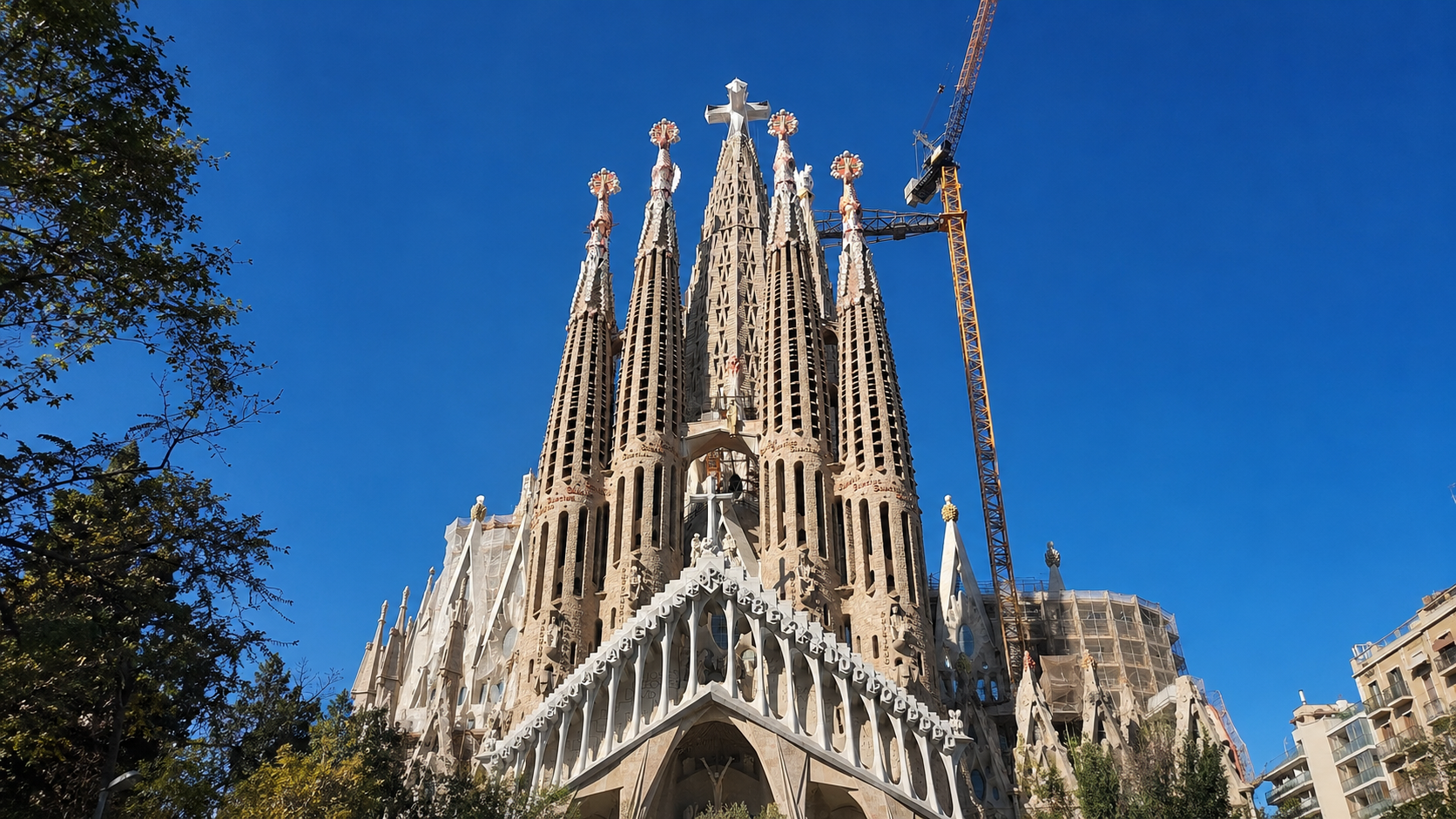
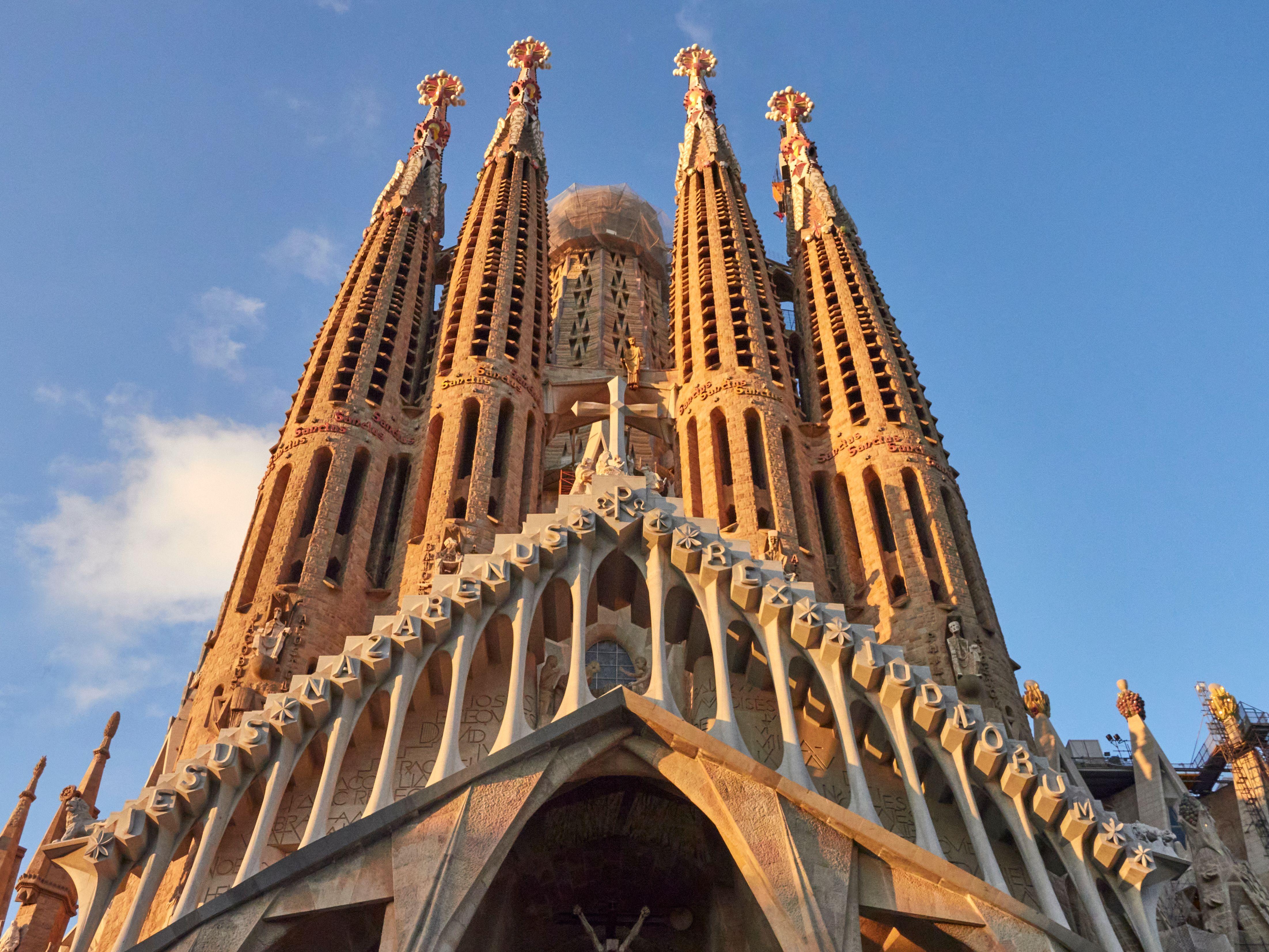
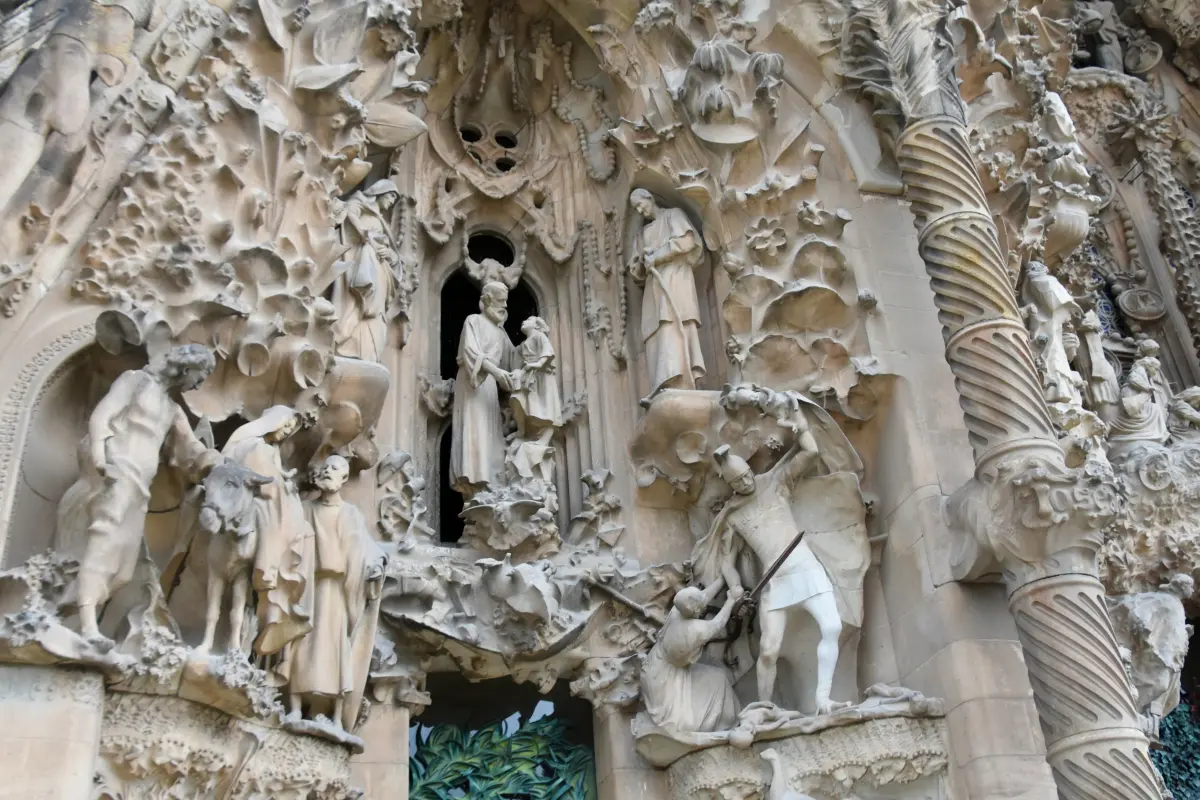
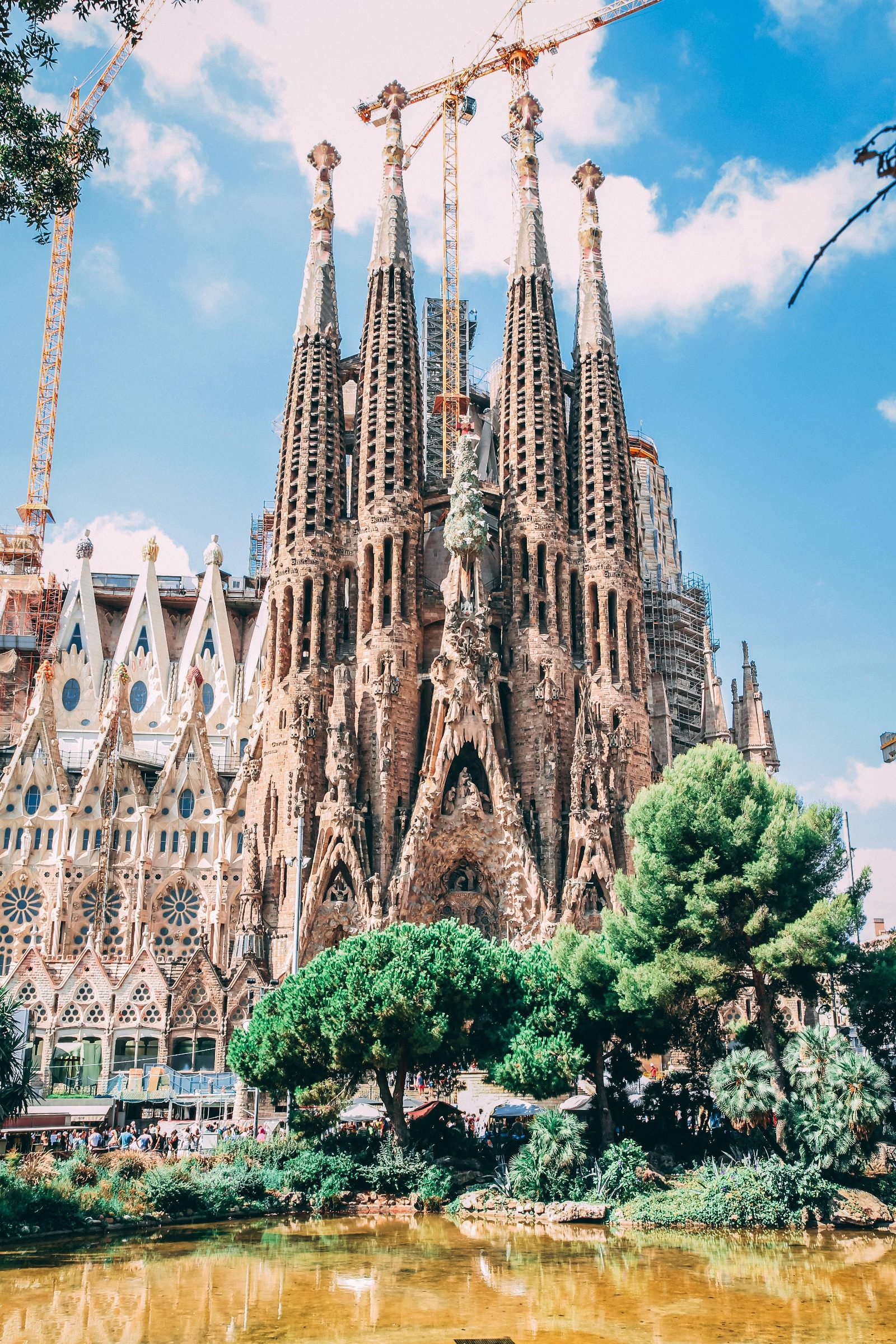
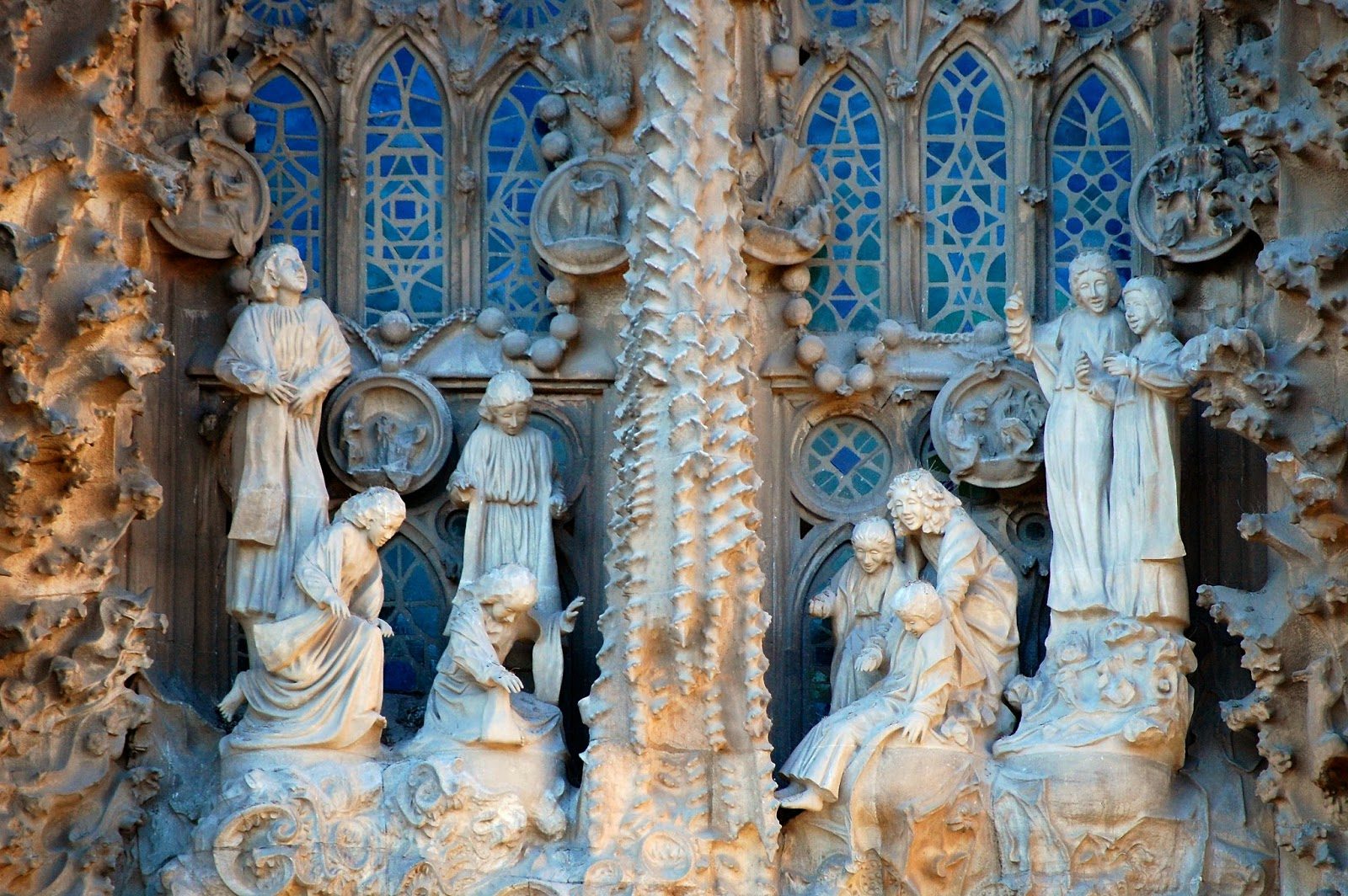
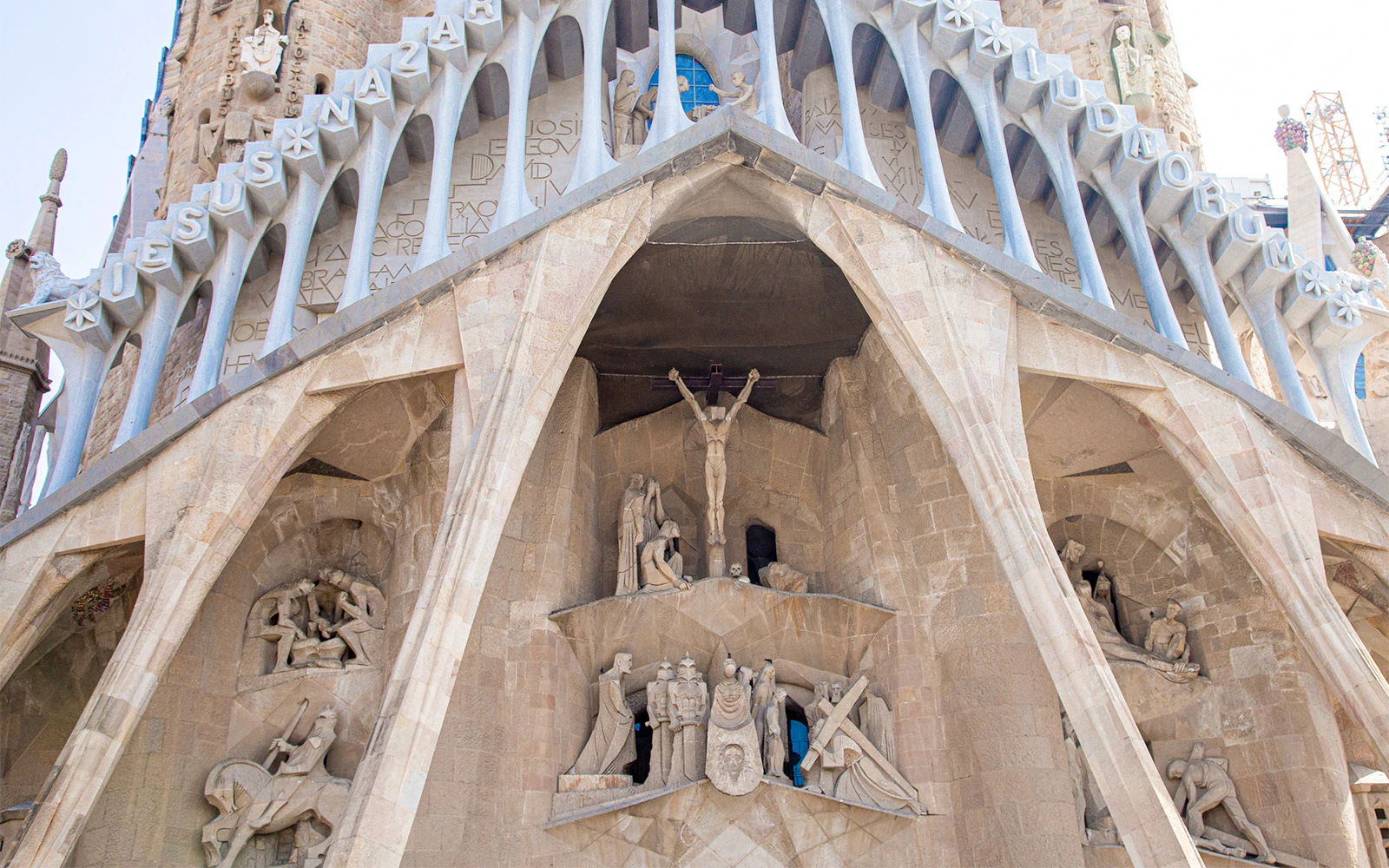
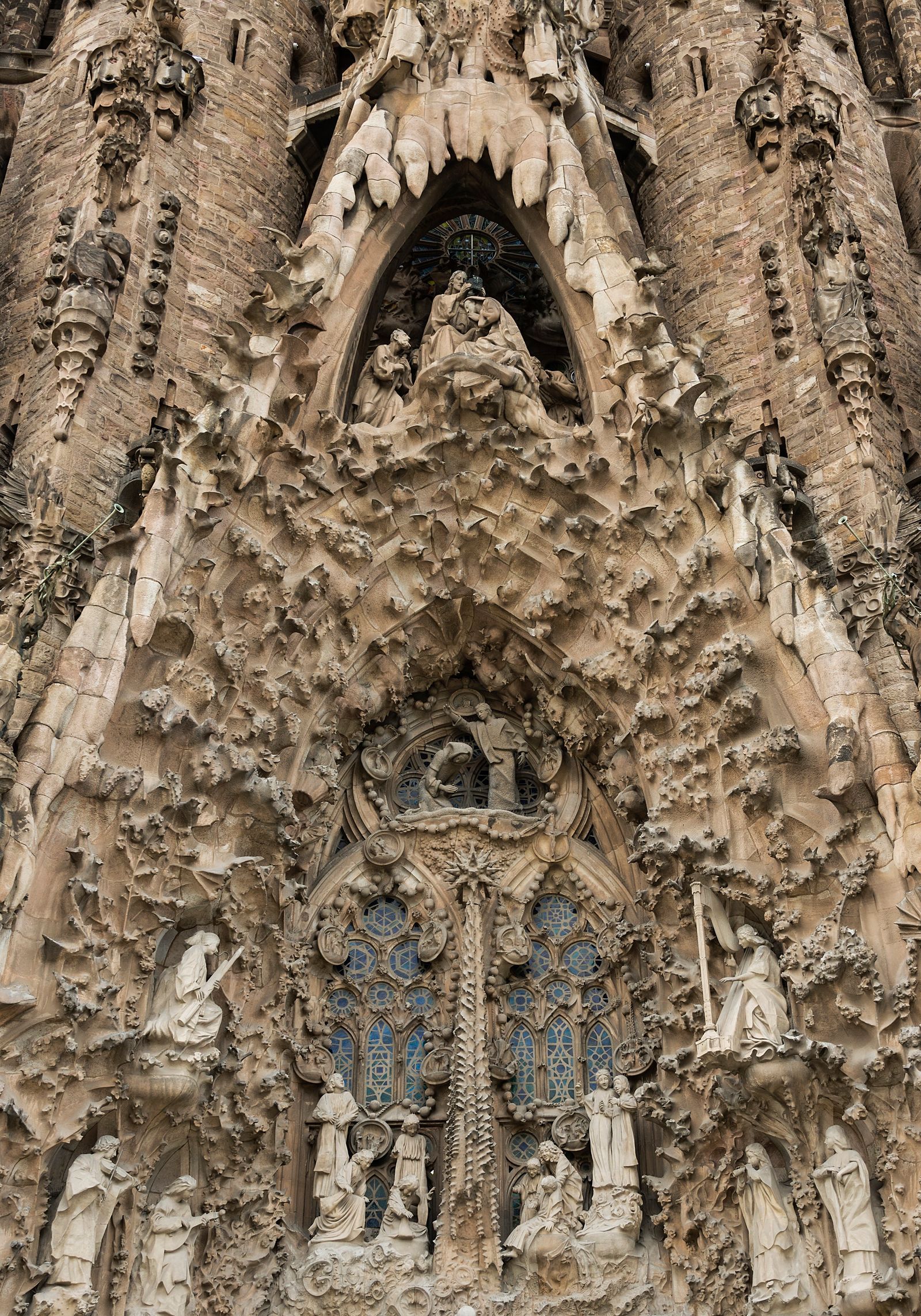
The oldest part of the building, featuring intricate carvings inspired by the birth of Jesus.
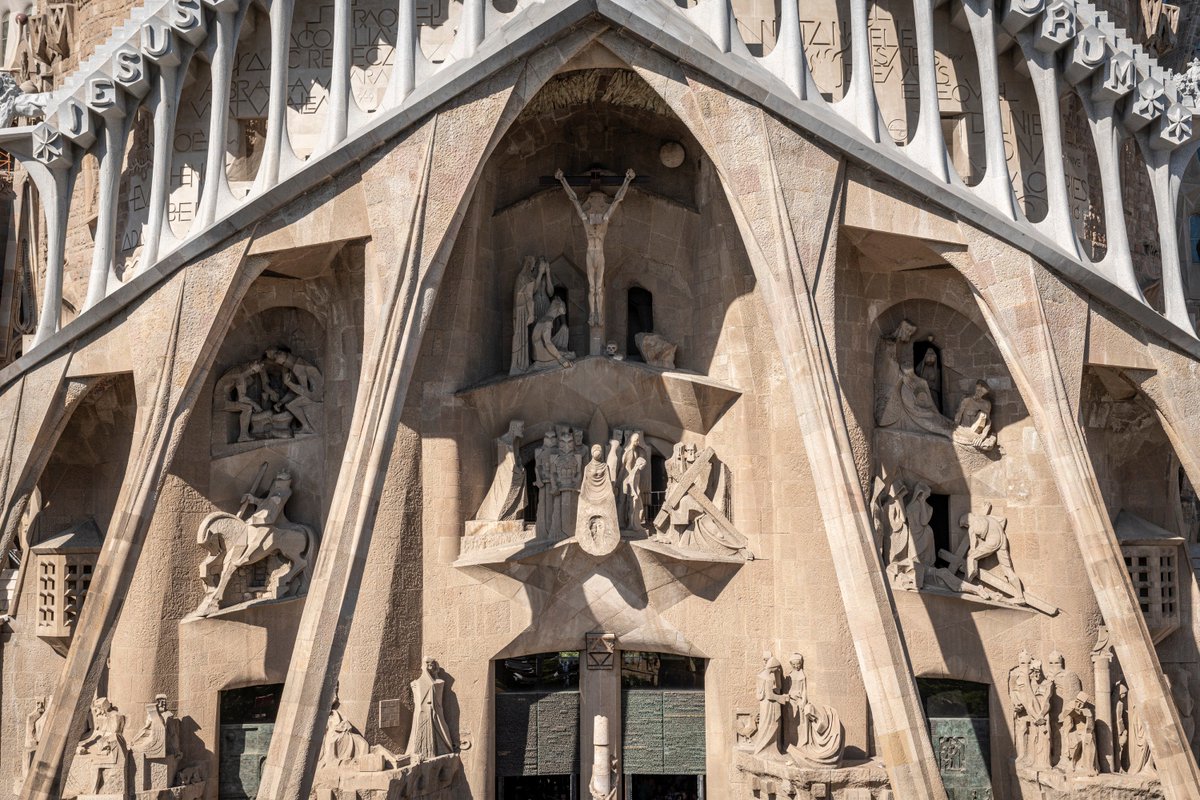
A stark contrast to the Nativity, this side depicts the suffering of Christ with angular forms.
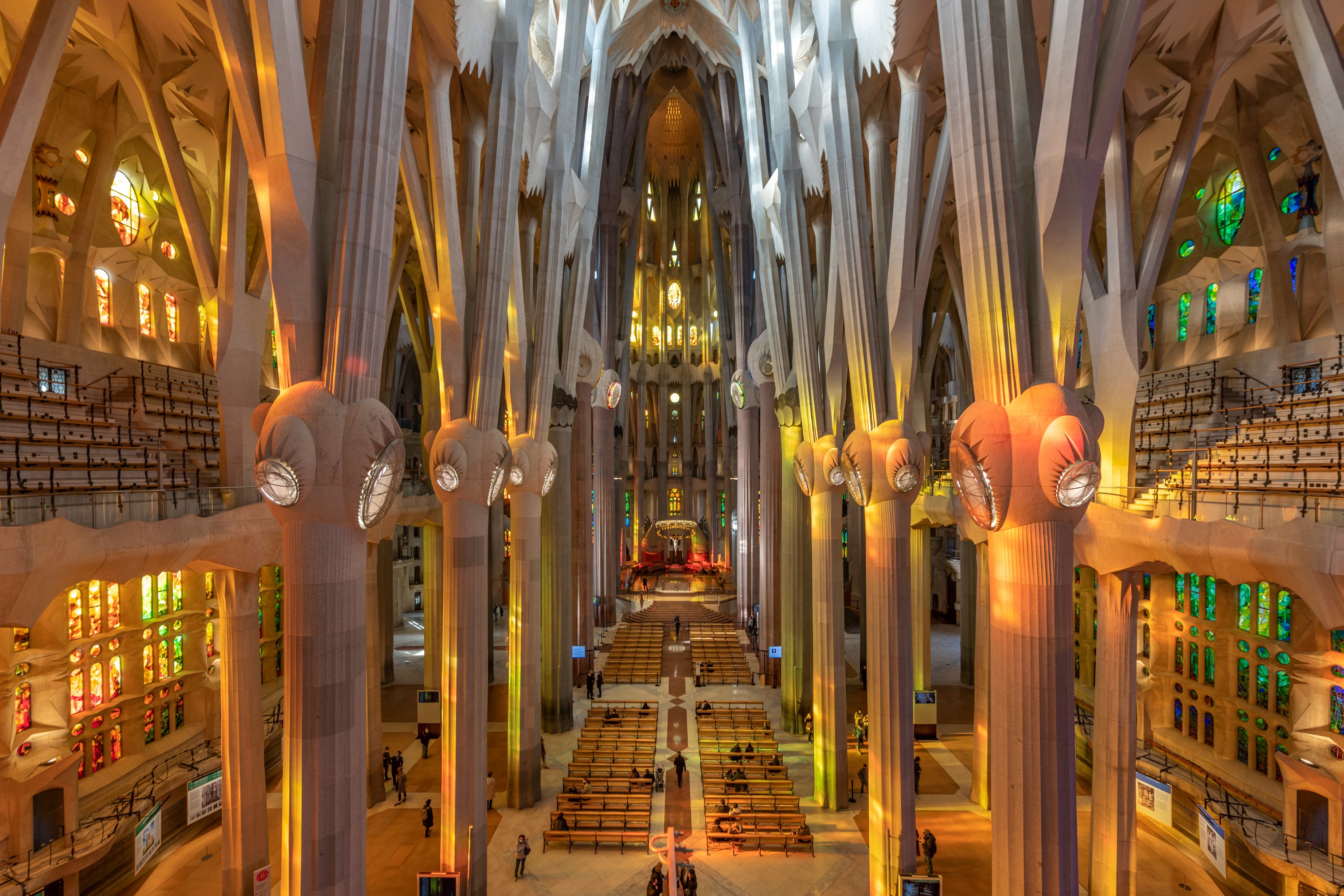
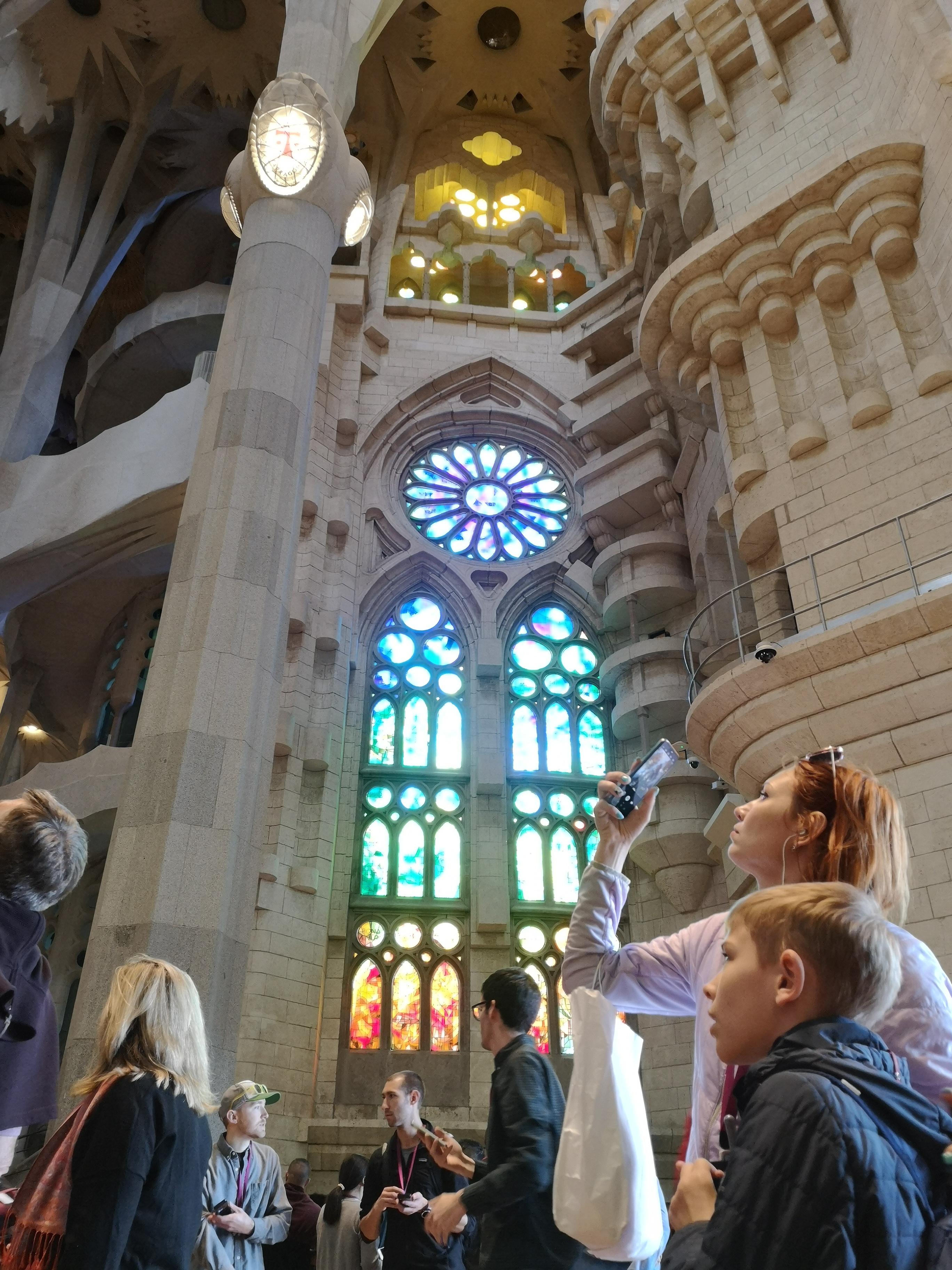
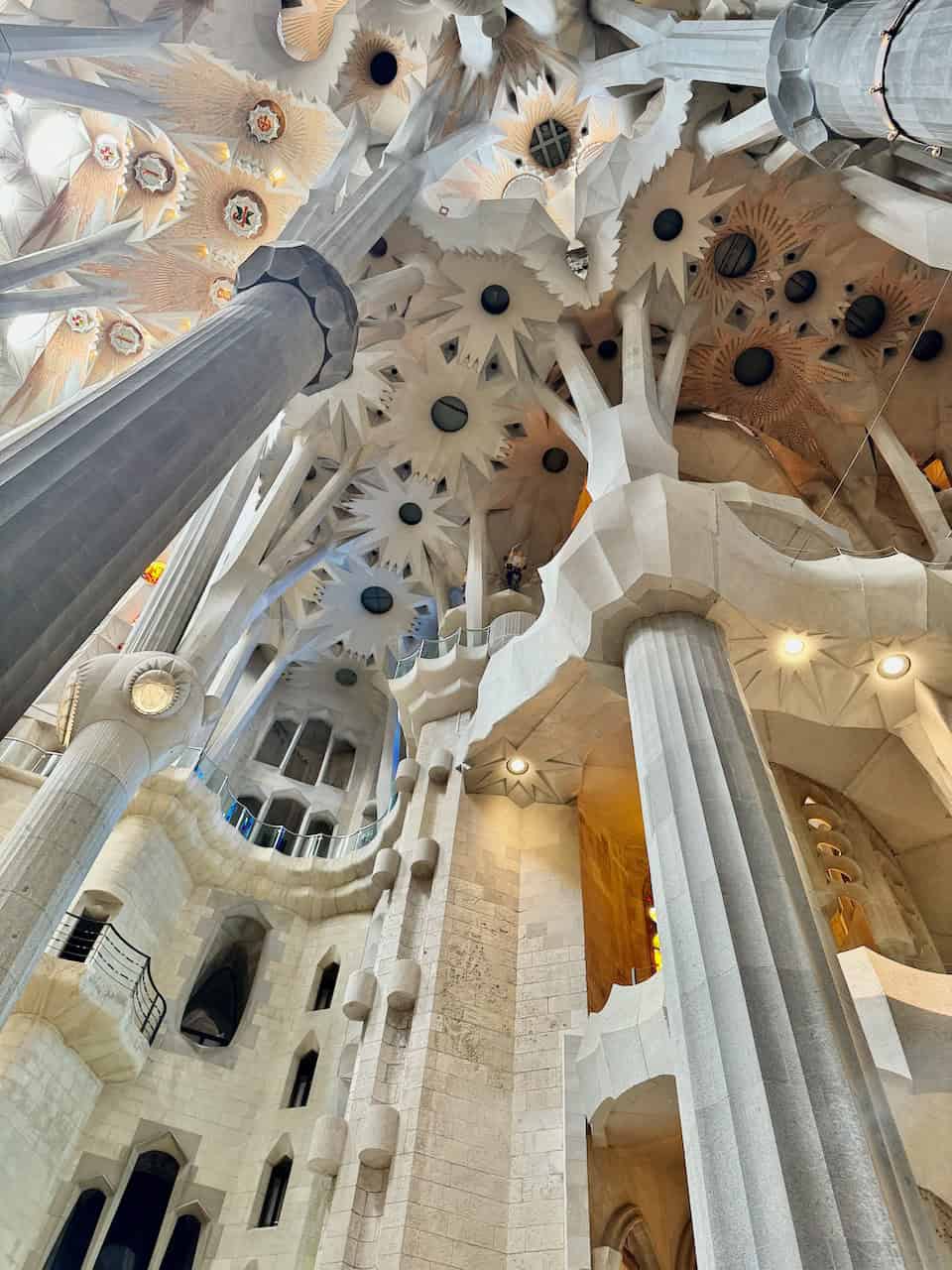
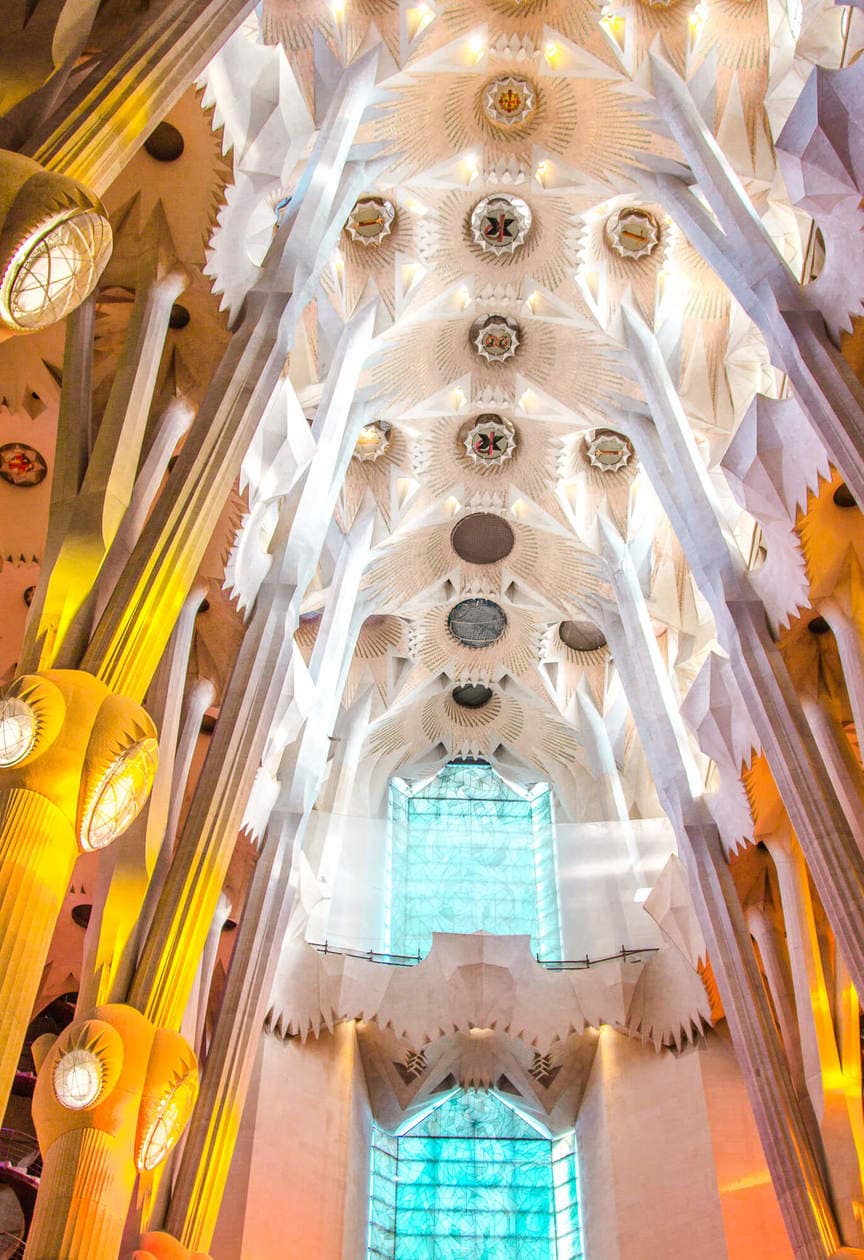
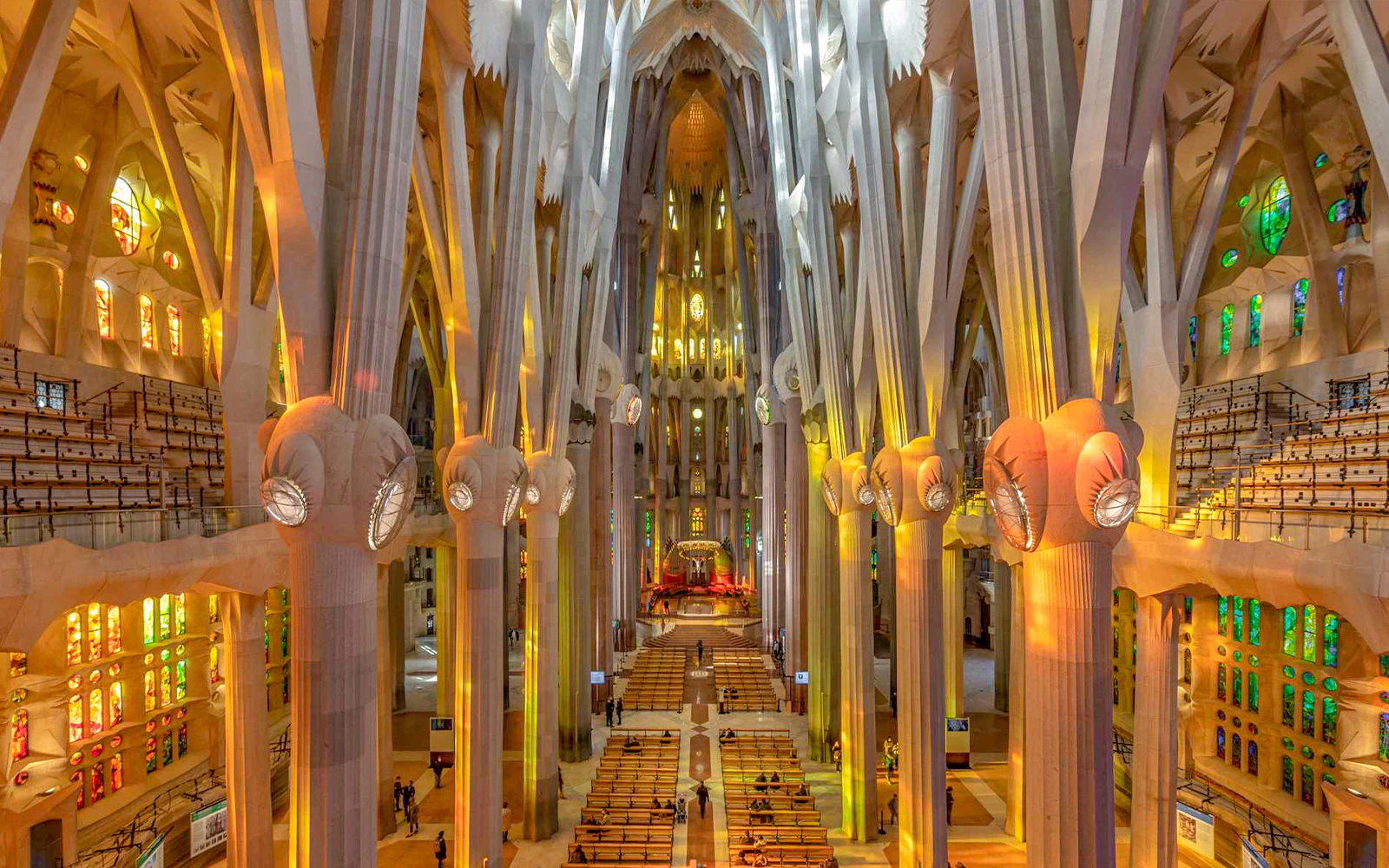
Towering, tree-like stone columns that support the expansive vaulted ceiling of the basilica.
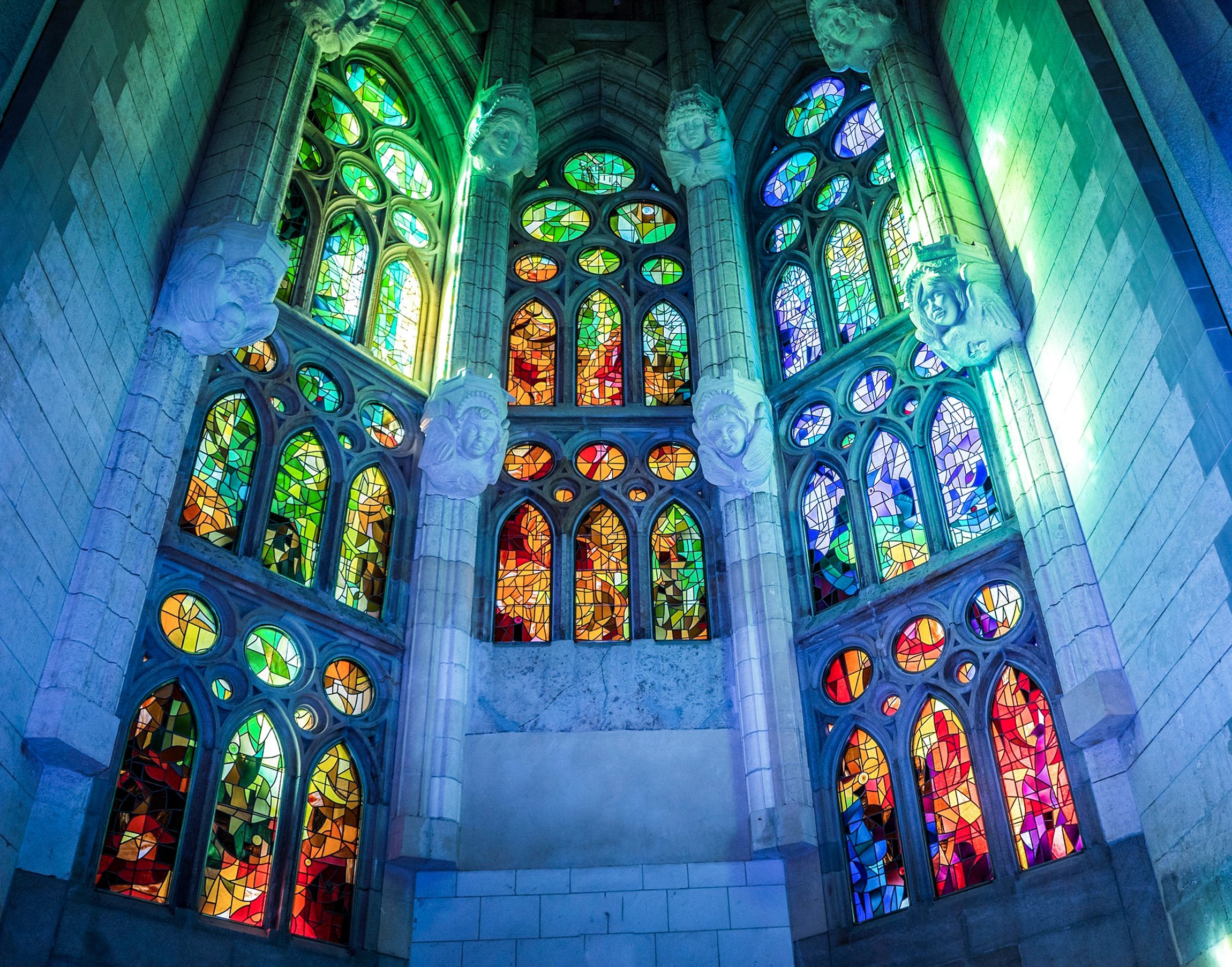
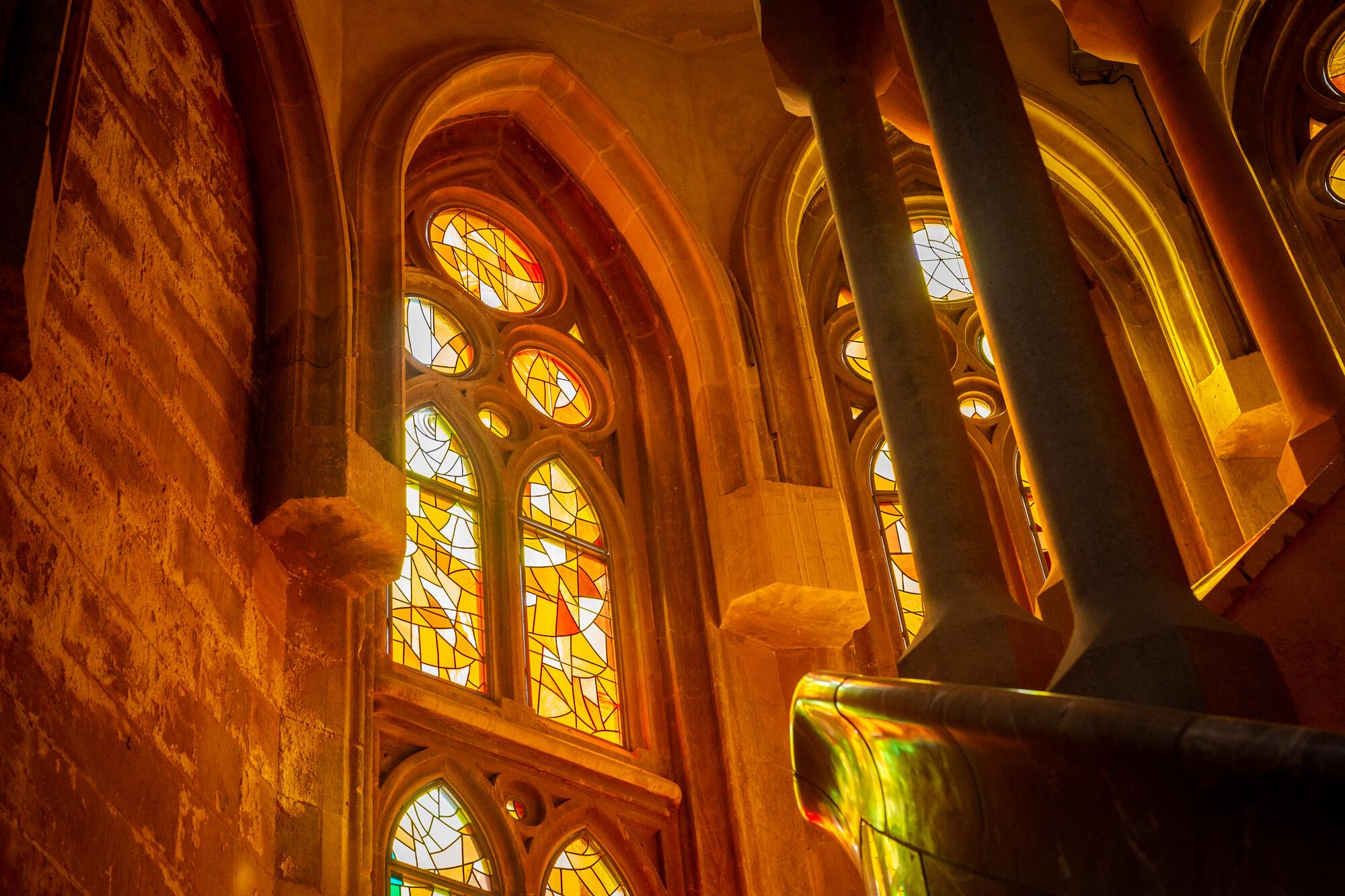
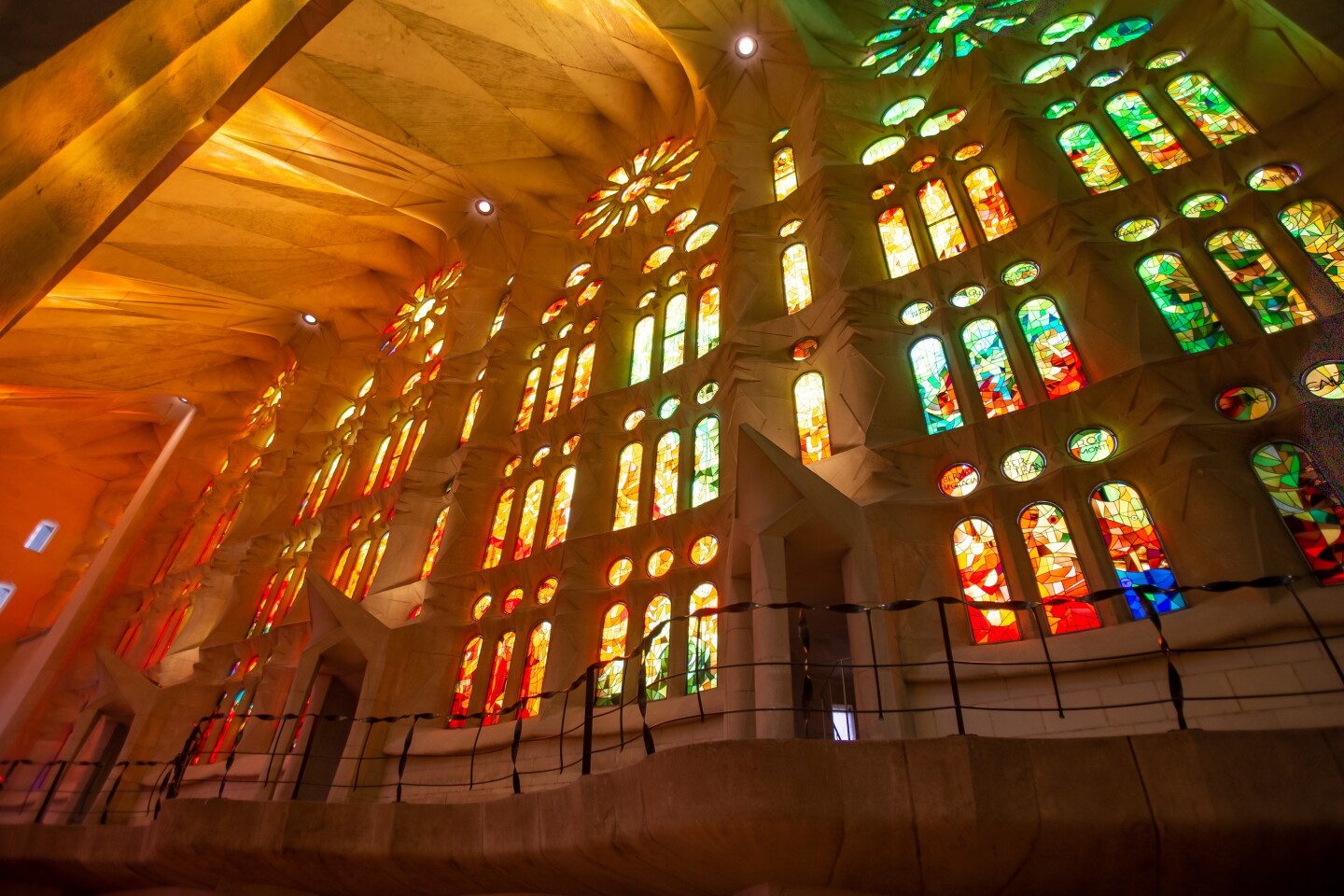
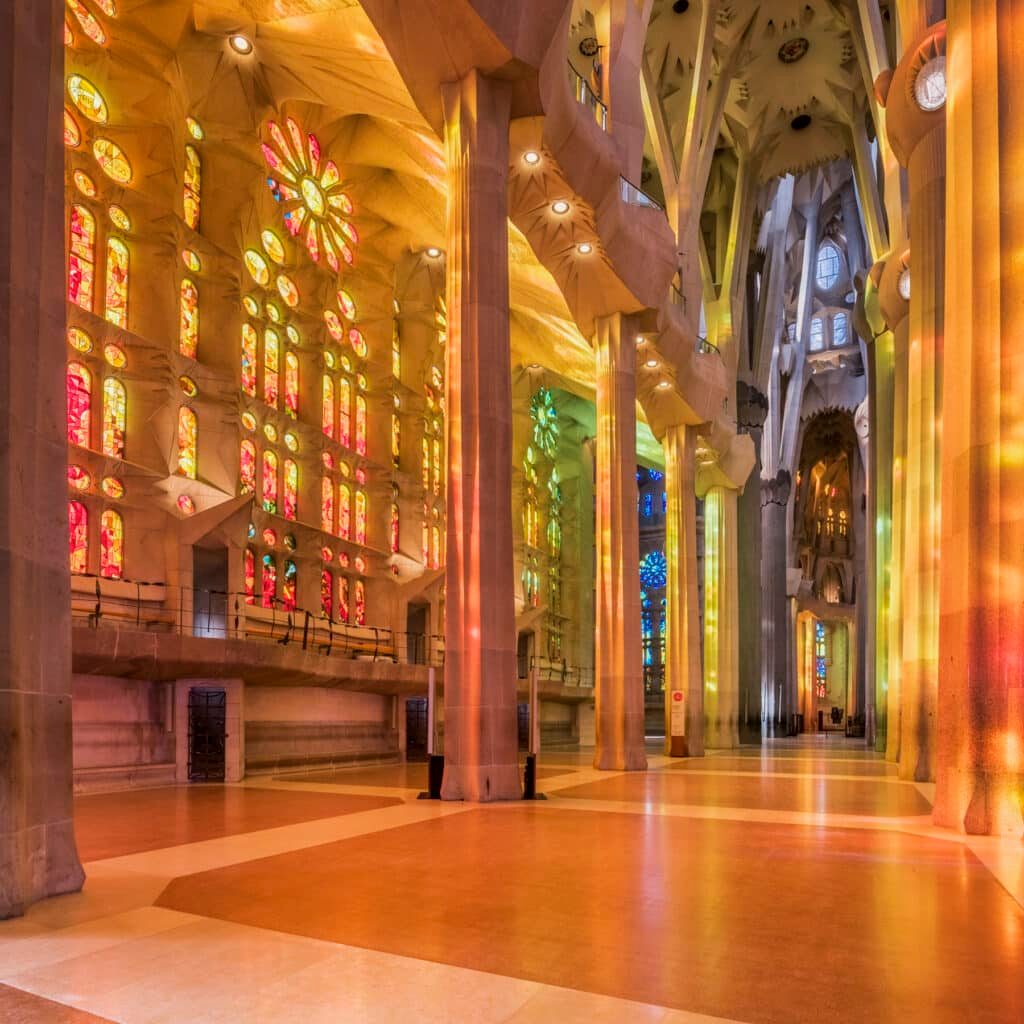
Dynamic light filters through these panes to create a shifting spectrum of color across the floor.
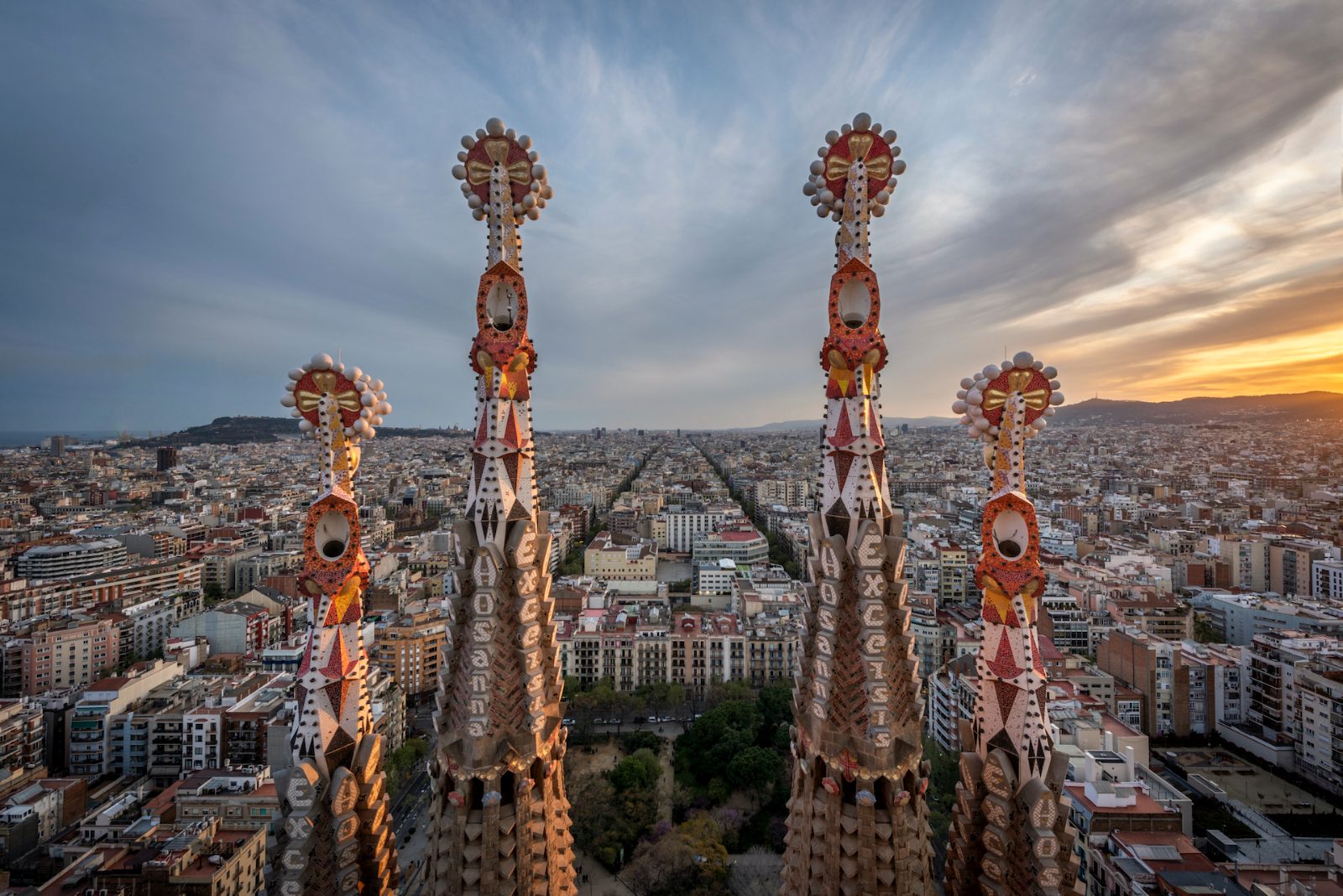
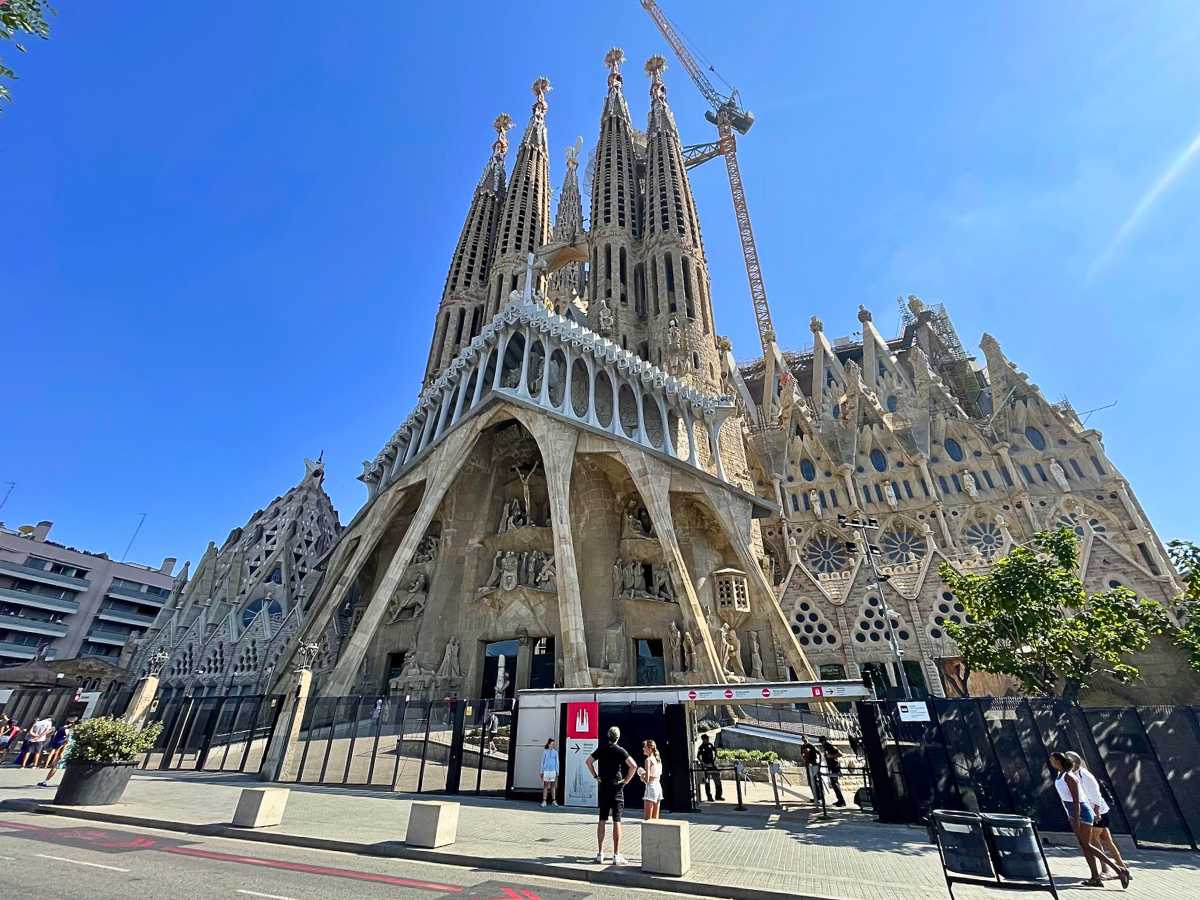
The centerpiece reaching 172.5 meters, newly completed to define the Barcelona skyline.
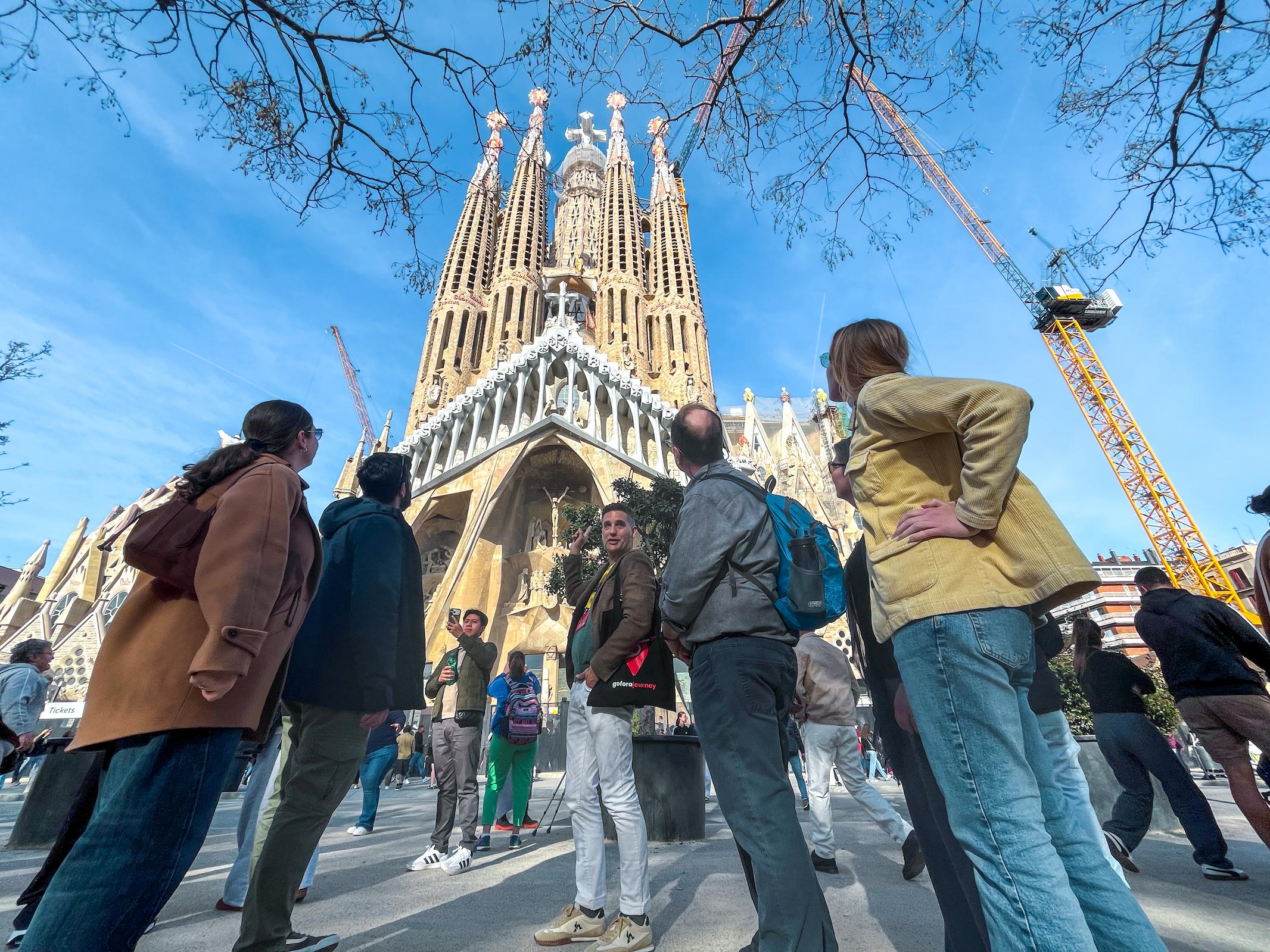
You arrive at Carrer de Mallorca shortly before 9:00, when morning light slants low across the Nativity façade. The priority lane moves quickly — you scan your mobile voucher and step through security into the vestibule. Ahead, the forest of columns opens into the nave.
You walk slowly down the central aisle, head tilted back to trace the branching geometry overhead. Sunlight pours through the eastern clerestory, casting blue and green shadows across the stone floor.
You pause beneath the crossing, where the transept intersects the nave. The audio guide explains the symbolism embedded in each column capital — palm fronds, olive leaves, laurel. You continue toward the apse, where Gaudí's tomb lies behind iron grillwork. A group gathers near the Passion façade, studying the angular sculptures of Christ's trial.
If you reserved tower access, you take the elevator to the Nativity spire's observation level. Barcelona spreads below — the grid of Eixample, the curve of the coast, Parc Güell's mosaics on the hillside. The descent spirals through tight staircases, stone worn smooth by millions of footsteps. You emerge back into the nave, quieter now, and spend a final moment watching light shift across the vaulted ceiling before exiting through the museum into the late morning bustle of Plaça de Gaudí.
All the details about your upcoming adventure in one place
Reserve sagrada familia skip the line entry to Gaudí's unfinished masterpiece and bypass the daily queues that form along the Nativity Façade. Guided sagrada familia skip the line tours lead you through the basilica's soaring nave, stained-glass transepts, and crypt, while audio options let you explore the UNESCO World Heritage site at your own rhythm. Both formats include direct access to the towers for views across Eixample's gridded streets.
Construction began in 1882 under architect Francisco de Paula del Villar, but when Antoni Gaudí assumed control a year later, he transformed the neo-Gothic plan into a radical synthesis of nature and faith.
Gaudí devoted the final 15 years of his life exclusively to the Sagrada Familia, living in a workshop on-site until his death in 1926 after being struck by a tram. He left behind plaster models and sketches that guide architects to this day. The basilica remains unfinished — completion is projected for 2026, exactly one century after Gaudí's passing, though delays persist.
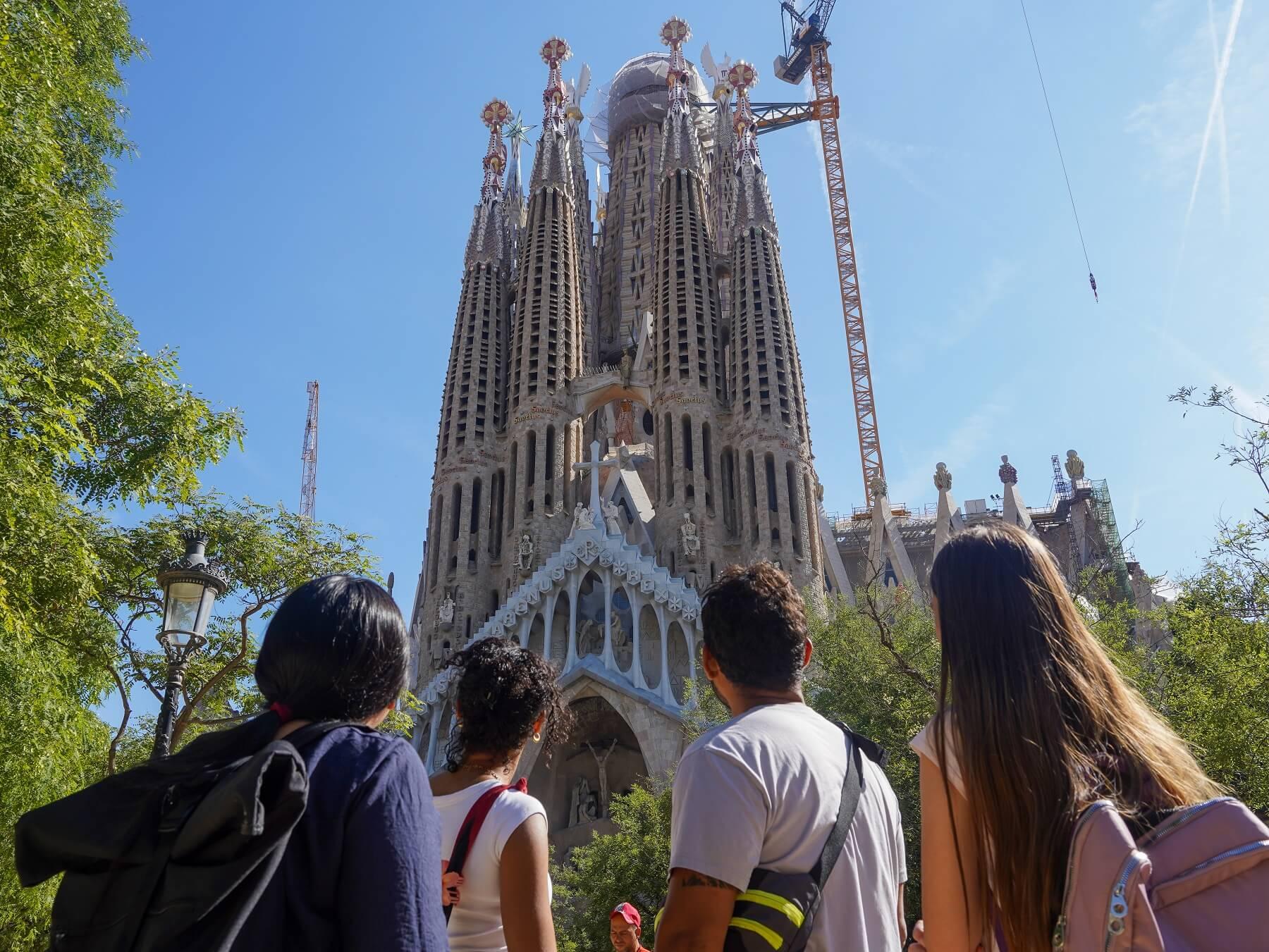
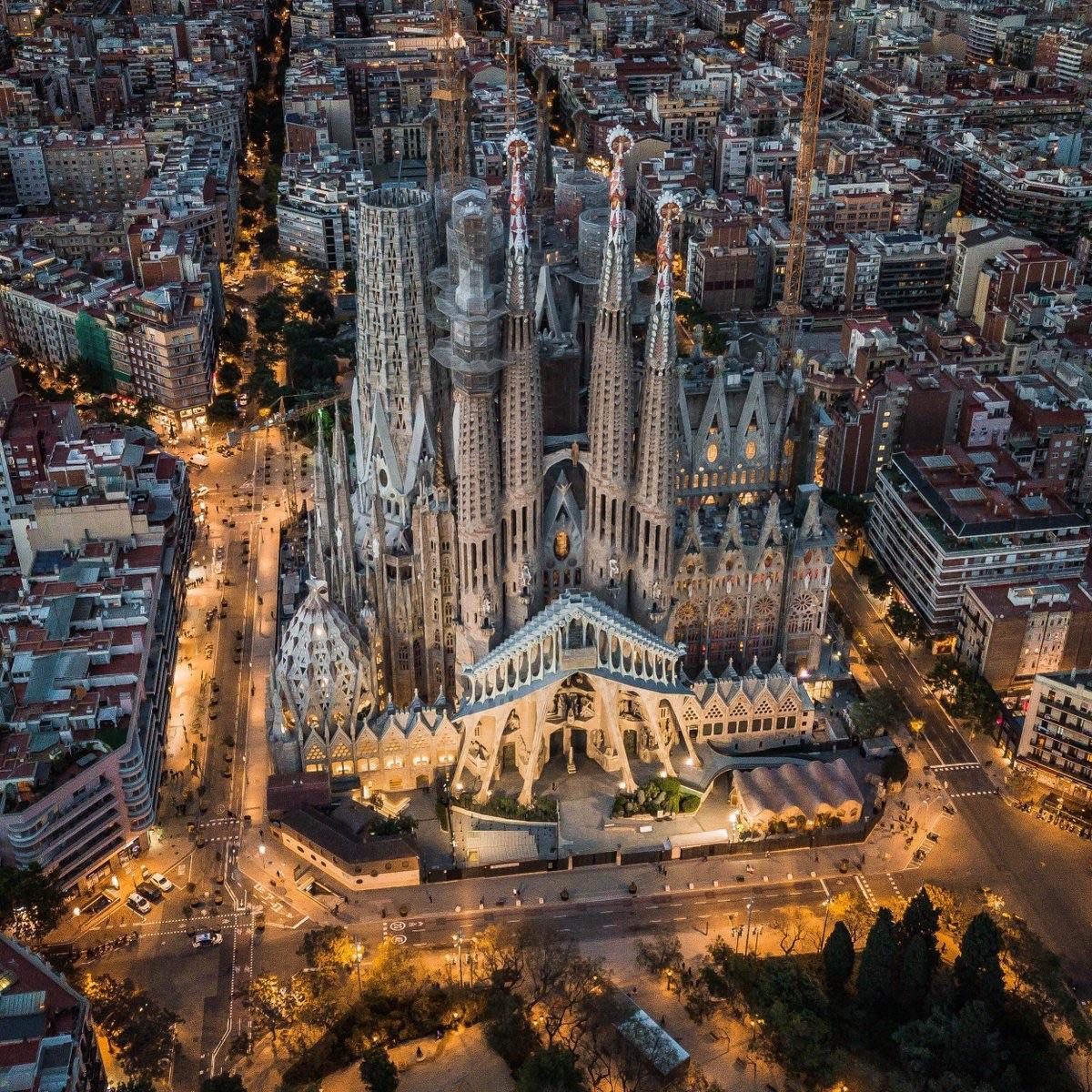
The structure's exterior bristles with three monumental façades: the Nativity façade to the east, completed during Gaudí's lifetime and depicting Christ's birth in exuberant detail; the Passion façade to the west, angular and stark, illustrating the crucifixion; and the Glory façade to the south, still under scaffolding, which will serve as the main entrance. Eighteen spires will eventually rise above the basilica — twelve for the apostles, four for the evangelists, one for the Virgin Mary, and the tallest, 172.5 metres, for Jesus Christ. Eight spires stand complete as of 2026, their ceramic-tiled pinnacles glowing against the Barcelona skyline.
Inside, the nave soars 45 metres overhead, supported by columns that branch like eucalyptus and palm trees. Gaudí studied the load-bearing geometry of organic forms, engineering each column to lean at calculated angles that channel weight into the foundation without flying buttresses. Stained glass floods the interior with saturated color — reds and oranges warm the western apse at sunset, blues and greens cool the eastern transept at dawn. The apse houses a crypt where Gaudí is buried, accessible only during select hours.
Sagrada familia skip the line tours typically include access to the nave, crypt exterior, and museum, which displays Gaudí's original models and mechanical studies. Tower access requires separate reservation — visitors ascend via elevator to observation platforms 65 metres above street level, then descend spiral staircases threading through the structure's core. The Nativity tower offers views across Parc Güell and the Mediterranean; the Passion tower frames Montjuïc and the port.
UNESCO inscribed the site in 2005, citing its exceptional interpretation of religious architecture through natural forms. Daily visitor capacity is capped at 4.5 million entries annually, enforced through timed ticketing. Morning slots between 9:00 and 10:00 avoid the midday crush.
Gaudí devoted the final 15 years of his life exclusively to the Sagrada Familia, living in a workshop on-site until his death in 1926.
As a Catholic basilica, visitors must wear modest clothing. Shoulders must be covered and garments must fall to at least mid-thigh.
All guests pass through airport-style security. Bags exceeding 35x25x20cm are not permitted inside the Sagrada Família.
Photography is permitted for personal use only. Flash and professional equipment like tripods or selfie sticks are prohibited.
Children under 16 must be accompanied by an adult. Sagrada Família skip the line tickets are required for all minors.
The Sagrada Família is fully accessible in the nave, museum, and shop. Tower access is not suitable for those with mobility, heart, or respiratory issues.
Consumption of food and beverages is strictly forbidden inside the monument. Water bottles are permitted provided they remain sealed.
Opening Hours
09:00–20:00 (Mon–Fri), 09:00–18:00 (Sat), 10:30–20:00 (Sun)
Address
Carrer de Mallorca, 401, 08013 Barcelona, Spain
Accessibility
Full nave access; tower access restricted to those with physical mobility challenges
Best arrival
09:00–10:00 — Avoid peak crowds and take advantage of the morning quiet hour
Storage
No lockers available for general luggage; large bags strictly prohibited
Official Site
https://sagradafamilia.org
Tickets are non-refundable as a standard rule. Requests for exchanges must be submitted at least 48 hours before your scheduled visit.
Recommended time
2 hours
Allocating two hours allows sufficient time to admire the Nativity and Passion facades, the interior nave columns, and the stained glass light effects. Securing sagrada familia skip the line access is essential to bypass the primary exterior queue, though interior traffic remains consistent regardless of entry type. Opting for sagrada familia skip the line tickets during the morning window minimizes congestion within the naves. Visitors who plan to explore the museum or the towers should allow for an additional hour to complete their sagrada familia skip the line tours comfortably.
Crowd levels through the day
Construction of the Sagrada Família began in 1882 under architect Francisco de Paula del Villar, who envisioned a conventional neo-Gothic church. One year later, Antoni Gaudí assumed control after disagreements over design direction. Gaudí transformed the project into a synthesis of Gothic revival and Art Nouveau, introducing parabolic arches, naturalistic sculptures, and a symbolic program encoding Biblical narratives into every facade. He devoted the final fifteen years of his life exclusively to the basilica, living on-site and relying on donations to fund the work. When Gaudí died in 1926 after being struck by a tram, only the crypt, apse, and one tower of the Nativity Facade stood complete. The Spanish Civil War brought construction to a halt in 1936. Anarchist forces destroyed Gaudí's original plaster models and workshop drawings, forcing later architects to reconstruct his vision from photographs and fragments. Work resumed in 1952 under Francesc Quintana, who prioritized structural stability over strict adherence to Gaudí's organic forms. The Passion Facade, inaugurated in 1976, sparked controversy for its austere, angular aesthetic—sculptor Josep Maria Subirachs rejected Gaudí's biomorphic style in favor of stark modernism. Critics argued the departure betrayed the architect's intent; defenders countered that rigid imitation would stagnate the project. Computer-aided design accelerated progress after 2000, enabling engineers to solve structural challenges Gaudí had sketched but never finalized. Pope Benedict XVI consecrated the basilica as a minor basilica in 2010, though six towers and the interior Glory Facade remained unfinished. Visitors booking sagrada familia skip the line access today witness active construction—cranes tower above the nave, stonemasons carve capitals in workshops visible from the transept, and scaffolding encases the central spire scheduled for completion in 2026. The building remains both monument and worksite, fulfilling Gaudí's prediction that later generations would complete his sacred geometry.
Francisco de Paula del Villar begins construction on a neo-Gothic church funded by donations
Antoni Gaudí takes over as chief architect and radically redesigns the basilica with naturalistic and symbolic elements
Gaudí dies after a tram accident; only the crypt, apse, and one Nativity tower are complete
Spanish Civil War halts work and destroys Gaudí's original models and workshop archives
Construction resumes under Francesc Quintana, prioritizing structural engineering over strict stylistic fidelity
Pope Benedict XVI consecrates the basilica as a minor basilica despite incomplete towers and facades
Central Jesus Christ tower nears completion, set to become the tallest church spire in Europe
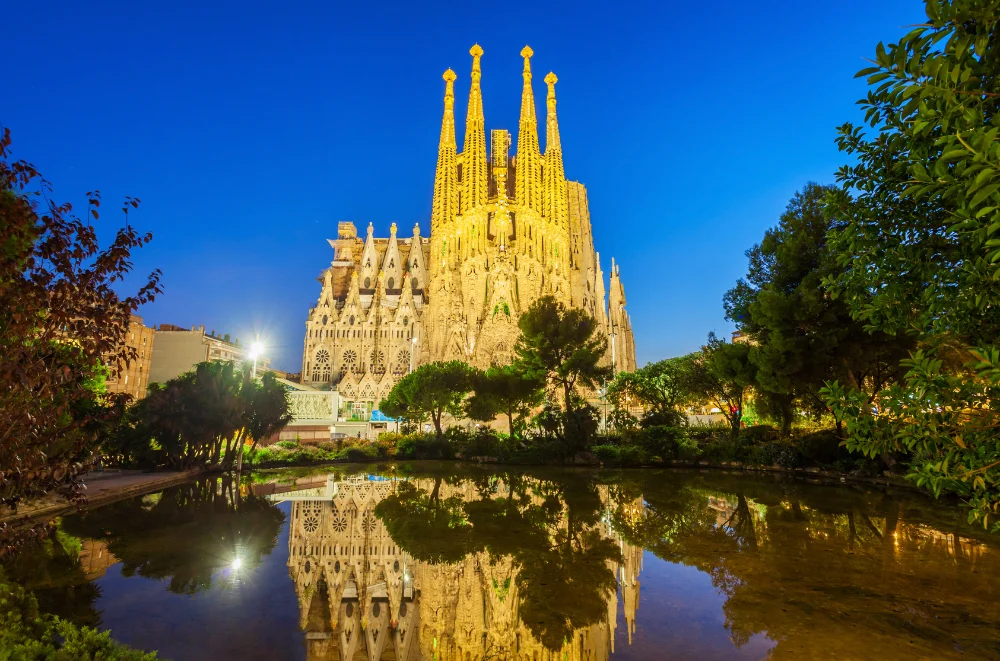
Position yourself by the pond for the classic reflection of the Nativity facade across the water. This spot captures the symmetry of the spires against the sky and is a perfect location for those using sagrada familia skip the line tickets to plan their morning session.
Focus on the intricate sculptural details depicting the birth of Jesus located on the eastern side. Use a telephoto lens to capture the organic stonework that defines Antoni Gaudí’s early vision.
This side offers a stark contrast with angular, dramatic figures representing the suffering of Christ. Photographers often favor the harsh shadows cast here during the later afternoon hours.
Stand near the center of the transept to capture the forest-like columns branching into the vaulted ceiling. Securing sagrada familia skip the line tour access allows you to focus on the interplay of colorful light refraction from the stained glass windows.
Walk down this street for a vertical alignment of the towers framed by urban architecture. It provides a unique perspective that highlights the sheer scale of the Basilica in relation to the city.
Real experiences from real travelers
Booking sagrada familia skip the line access was the best decision we made in Barcelona. We walked straight in while hundreds waited in the regular queue. The basilica interior is unlike anything I've seen—those columns really do look like a stone forest. Gaudí's vision becomes clear once you're inside looking up at the vaulted ceiling.
Fast-track entry saved us at least 90 minutes on a busy August morning. The light coming through the stained glass windows around 10am was extraordinary. Audio guide included with our tickets provided context we would have missed otherwise.
The nativity facade alone deserves an hour of your attention before you even step inside. We used sagrada familia skip the line tickets and entered within five minutes of our time slot. The tree-like columns and organic forms throughout show Gaudí's genius for blending nature with sacred space.
Even with priority access the basilica was quite full by midday. The architecture is genuinely breathtaking once you get past the crowds. I recommend the earliest morning slot if you want space to appreciate the details without bumping into tour groups.
We tried walk-up tickets on our first day and everything was sold out. Returned the next morning with sagrada familia skip the line reservations and walked right in. The scale of the interior is impossible to grasp from photos—you have to stand beneath those vaulted ceilings yourself.
The contrast between the completed sections and ongoing construction adds to the experience rather than detracting from it. Skip-the-line access let us maximize our limited time in Barcelona. The passion facade tells a completely different story than the nativity side.
Visiting around 3pm put us there when afternoon sun hits the western windows. The entire nave filled with deep reds and oranges. Our sagrada familia skip the line tour included tower access which gave us views across all of Barcelona.
The structural innovation behind those branching columns is as impressive as the aesthetics. We entered during our reserved time slot with no wait. Construction has been ongoing since 1882 and seeing it in person you understand why—the level of detail is obsessive.
The basilica is smaller than I expected given its fame, but every surface carries meaning. We spent about 90 minutes inside which felt right. Fast-track tickets were essential—the regular line wrapped around two blocks when we arrived.
Even for non-religious visitors the space creates a sense of awe. Morning light through the blue and green eastern windows felt serene and meditative. Booking sagrada familia skip the line access meant we started our Barcelona day on time and stress-free.
Everything you need to know for your journey
You must purchase your sagrada familia skip the line tickets exclusively via the official website to guarantee entry.
The Sagrada Família is open Monday–Friday 09:00–20:00, Saturday 09:00–18:00, and Sunday 10:30–20:00.
Yes, modest dress is required; shoulders must be covered and bottoms must reach at least mid-thigh.
Only bags under 35x25x20cm are allowed, as there is no storage for large items at the Sagrada Família.
Yes, personal photography is allowed, but flash and tripods are strictly prohibited during your sagrada familia skip the line visit.
The entrance fee is 26 EUR per person, which serves as a conservation fee for the Sagrada Família.
Yes, the main areas of the Sagrada Família are accessible, though towers are not suitable for those with limited mobility.
For the best experience, arrive between 09:00–10:00 to avoid peak crowds after securing your sagrada familia skip the line tickets.
You can easily visit the nearby Hospital de Sant Pau after your sagrada familia skip the line tour.
Join thousands of happy travelers who have discovered this incredible experience
Book Your Experience Now